Decree 169/2026/NĐ-CP: What's New in Customs Administrative Penalties
Statute of limitations, penalty calculation, new authority for the People's Police, and a host of other changes compared with Nghị định 128/2020/NĐ-CP — explained simply for import-export businesses.
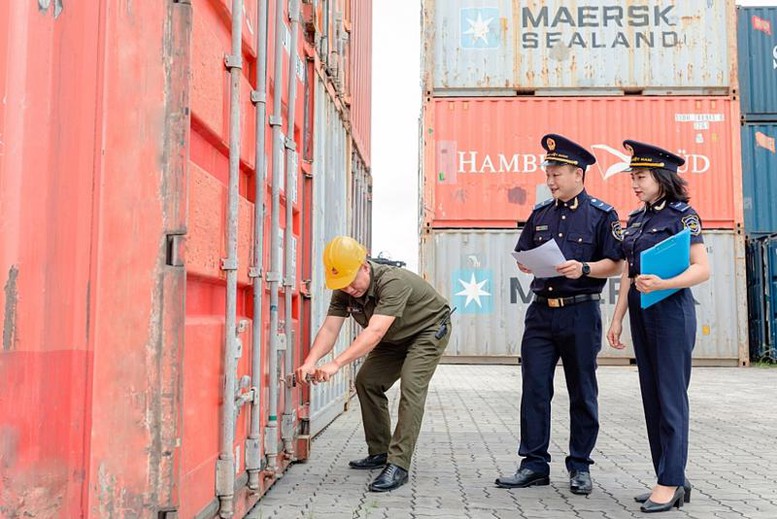
On July 1, 2026, Nghị định 169/2026/NĐ-CP on administrative penalties in customs officially took effect, replacing Nghị định 128/2020/NĐ-CP, which had been in force for nearly 6 years. This is not just a document-number change: how the statute of limitations is calculated, the formula for setting penalty amounts, the scope of exemptions, and even which agency has authority to issue penalties have all changed significantly. This article explains the most important changes in plain language, for readers without a legal background — including corrections to some inaccurate claims currently circulating about which article covers what.
What document does Nghị định 169/2026/NĐ-CP replace, and why
Nghị định 169/2026/NĐ-CP replaces Nghị định 128/2020/NĐ-CP on administrative penalties and enforcement of administrative decisions in the customs sector. According to the Vietnam Government Portal, the goal of the revision is to resolve difficulties that arose in customs management practice under the old decree, while also removing violations that are no longer consistent with current law or no longer occur in practice.
One important thing to know when reading and citing the new decree: the article numbering has changed compared with Nghị định 128/2020/NĐ-CP. Some content that seemed "familiar" at a certain article in the old decree has now moved to a different article, or an article with the same number as before now has substantially different content. This is why a number of posts and social-media shares have recently cited the wrong article — this piece will point out where those mix-ups happen.
New concepts: a violation that has "ended" versus one that is "still ongoing"
Article 5, clauses 6 and 7 of Nghị định 169/2026/NĐ-CP introduce two concepts used to calculate the statute of limitations:
This distinction matters because it determines which date is used as the starting point for the limitation "countdown" — explained in more detail in the next section.
- A violation that has ended: a violation with a specific, identifiable end date (e.g. the date a customs declaration was registered, the date misuse of a digital signature or account stopped, the date a settlement report was filed...). For this type of violation, the limitation period starts running from that end date.
- A violation that is still ongoing: a violation that is still continuing at the time it is detected, with no end date yet. For this type of violation, the limitation period has not started running until the violation actually ends.
Statute of limitations: shorter overall, but with an exception for cases referred to criminal proceedings

Article 5 of Nghị định 169/2026/NĐ-CP sets the statute of limitations for customs administrative violations as follows:
The diagram below summarizes this entire limitation-period logic under Article 5:
- 2 years for customs violations in general.
- 5 years for tax-related violations in the customs sector (tax evasion, tax fraud...).
- If a case was ever referred to a criminal-proceedings agency for consideration of criminal liability, and that agency later decides not to prosecute (or rescinds the prosecution decision) and returns the file for administrative handling, the limitation period is extended by 1 year compared with the original period; the time the criminal-proceedings agency spent handling the file still counts toward the limitation period (Article 5, clause 4).
Violations involving digital signatures, accounts, and e-declaration systems: where the actual penalty lives
One claim being shared quite widely is that "the new decree tightens penalties for violations involving digital signatures, accounts, and e-declaration systems at points h and i, clause 6, Article 5." This needs a correction: points h and i, clause 6, Article 5 are only markers used to determine the end date of a violation (for calculating the limitation period, as explained above) — they are not the provision that sets the penalty for the violation itself.
The actual penalty for violations involving unauthorized use of a digital signature, unauthorized account access, or unauthorized access to the Customs Electronic Data Processing System is set out in Article 12, clause 7 of Nghị định 169/2026/NĐ-CP. This is a textbook example of the article-mix-up mentioned at the start of this piece — Article 5 only governs the limitation-period principle, while the actual penalties for specific violations are scattered across different articles of the decree.
A clearer, more transparent formula for calculating penalty amounts
Points d and e, clause 3, Article 6 of Nghị định 169/2026/NĐ-CP spell out more clearly how to calculate the specific fine for a violation, based on the penalty bracket (minimum — maximum) together with aggravating and mitigating circumstances — rather than leaving the penalizing agency wide discretion as before. This makes it easier for businesses to predict the likely fine by checking their own conduct against the rules, and reduces inconsistency between different localities and customs units.
Broader exemptions from penalties
Clause 2, Article 7 of Nghị định 169/2026/NĐ-CP expands the list of situations in which an organization or individual is not penalized, including cases such as: acting exactly in accordance with written guidance or a response from a competent customs authority; errors caused by the customs IT system; or force majeure. This is a business-friendly change that protects businesses acting in good faith from being unfairly penalized for faults that are not their own.
A new measure for handling fake seals and labels
Point k, clause 5, Article 6 of Nghị định 169/2026/NĐ-CP adds a new remedial measure: mandatory destruction of counterfeit customs seals and fake stamps/labels. This is a provision that Nghị định 128/2020/NĐ-CP previously did not have, aimed at more thoroughly dealing with counterfeit items related to customs seals and labels, rather than stopping at a monetary fine.
Article 8: reporting obligations and customs procedure deadlines — not just for processing, EPE, and export-manufacturing businesses
Another point that needs a correction: Article 8 of Nghị định 169/2026/NĐ-CP is often understood (and shared) as a dedicated provision "tightening rules for processing enterprises, export processing enterprises (EPEs), and manufacturing-for-export (SXXK) businesses." In fact, Article 8 is a general provision on violations of deadlines for customs procedures, filing documents, and reports — applying to many different categories of parties that make customs declarations, of which processing/EPE/SXXK businesses are just one category covered, not the sole or primary focus of this article. Businesses of other types (including non-processing/EPE/SXXK businesses) also need to review their own reporting and filing deadlines under this article.
Tighter penalties for misdeclaring the origin of goods
Point b, clause 3, Article 9 of Nghị định 169/2026/NĐ-CP sets higher penalties and describes the violation more specifically for misdeclaring the origin of exported or imported goods, compared with the previous Nghị định 128/2020/NĐ-CP. Given that origin of goods is a sensitive issue (tied to trade-defense measures and preventing origin fraud used to claim preferential tariffs), this is a point import-export businesses need to pay special attention to when declaring C/O and origin on customs declarations.
Other new points that get less attention but are worth noting
Beyond the highlights above, Nghị định 169/2026/NĐ-CP also includes several other noteworthy changes:
- A clear definition of "exhibits/evidence of an administrative violation" in the customs sector (clause 2, Article 3) — clarifying which goods or means of transport are considered evidence when handling a violation, avoiding disputes over application.
- Voluntarily paying the full tax amount before a penalty decision is issued (point b, clause 4, Article 10) — applies to cases where a file is transferred from criminal proceedings back to administrative handling; if a business voluntarily pays the full tax amount before a penalty decision is issued, this can be taken into account when the case is handled.
- Not considered a violation if a business misdeclares a code or tax rate while following prior official guidance from customs (clause 5, Article 15) — if a business declared exactly according to specific written guidance previously provided by the customs authority, and this is later found to be an incorrect declaration, the business is not penalized.
- The People's Police force may now directly issue penalties for certain customs administrative violations detected within customs operating areas, without having to refer the file to the customs authority for handling as before (Article 33 and clause 7, Article 34).
- Administrative penalties handled in the electronic environment (Article 37) — for the first time, a dedicated provision for issuing decisions and paying fines electronically, in line with the digital-transformation direction under Nghị quyết 57-NQ/TW of the Politburo.
Old provisions that have been repealed
Compared with Nghị định 128/2020/NĐ-CP, Nghị định 169/2026/NĐ-CP removes several provisions judged to be no longer consistent with current law or no longer occurring in practice, including: point b, clause 1, Article 8 (old); point d, clause 1, Article 9 (old); and clause 8, Article 11 (old) of Nghị định 128/2020/NĐ-CP. Businesses no longer need to worry about violations that used to be defined under these points and clauses.
What import-export businesses should do
- Review your entire customs declaration process against the new article numbers in Nghị định 169/2026/NĐ-CP — don't rely on the familiar article numbers from Nghị định 128/2020/NĐ-CP, since the content has been reshuffled.
- For any case still being processed that was ever referred to criminal proceedings: note that the limitation period may be extended by 1 year under Article 5, clause 4.
- Review the use of digital signatures and e-declaration accounts to make sure only the right, authorized people are using them — the penalty provision is at Article 12, clause 7.
- If your business has multiple business types (not just processing/EPE/SXXK), you still need to review your reporting and filing deadlines under Article 8.
- Double-check how you declare the origin of goods (C/O, origin declared on the customs form), since penalties for misdeclared origin have increased under Article 9.
- Keep full records of any written guidance from the customs authority, to use as evidence under clause 5, Article 15 in case of a dispute over code or tax rate.
Frequently Asked Questions
When did Nghị định 169/2026/NĐ-CP take effect?
The decree took effect on July 1, 2026, replacing Nghị định 128/2020/NĐ-CP in full.
Why do many social-media posts cite an article that doesn't match the decree's actual content?
Because the article numbering in Nghị định 169/2026/NĐ-CP has changed compared with Nghị định 128/2020/NĐ-CP. Some people still search by the old decree's article numbers out of habit, or confuse a principle-setting article (like Article 5 on limitation periods) with the article that sets the actual penalty (like Article 12 on digital signatures).
If a violation is "still ongoing," can it still be penalized, or does customs have to wait until it ends?
Customs can still detect and act on an ongoing violation; the only difference is in how the limitation period is calculated — for an ongoing violation, the limitation period has not started running until the violation ends, which does not mean it cannot be handled yet.
Are businesses that are not processing, EPE, or SXXK enterprises affected by Article 8?
Yes. Article 8 is a general provision on violations of customs procedure deadlines, document filing, and reporting, applying to many categories of parties making customs declarations, not just processing, EPE, or SXXK businesses.
- Nghị định số 169/2026/NĐ-CP quy định xử phạt vi phạm hành chính trong lĩnh vực hải quan, có hiệu lực từ 1/7/2026 (thay thế Nghị định số 128/2020/NĐ-CP)
- Nghị định số 128/2020/NĐ-CP ngày 19/10/2020 của Chính phủ quy định xử phạt vi phạm hành chính trong lĩnh vực hải quan (văn bản được thay thế)
- Cổng Thông tin điện tử Chính phủ, "Hoàn thiện khung pháp lý về xử phạt vi phạm hành chính trong lĩnh vực hải quan", đăng ngày 21/5/2026
- Nghị quyết 57-NQ/TW của Bộ Chính trị về đột phá phát triển khoa học, công nghệ, đổi mới sáng tạo và chuyển đổi số quốc gia
Need shipping support?
Air Sea Worldwide (Vietnam) Co., Ltd
Ocean freight · Air freight · FCL/LCL logistics Vietnam – Latin America (Brazil, Argentina, Chile, Peru, Colombia)
Mobile: +84 968 064 737 · Email: tin.ho@asw-hochiminhcity.com.vn